The weather in Miami is harsh on roads. The combination of the constant heat of the sun, the constant water pressure and salt air from Biscayne Bay can cause a shoddy driveway to crack, sink, and become very costly to repair in just a few years! At Hulse Construction Group, we have experienced the difference in what is a 20 year driveway and a 5 year driveway. The solution is usually determined by the materials used, the preparation of the base and the experience of the contractor you are hiring.
Choosing the right material and knowing exactly what the installation process entails are a major part of driveway paving installations in Miami, FL. Whether you’re picking from the right material or understanding exactly what the installation process entails, there’s a lot you need to know about driveway paving installations in Miami, FL. If you’re creating a new driveway or replacing an old one, this is the information you’ll need to make an educated and confident decision
Why Local Conditions Shape Every Paving Decision
When it comes to your driveway, most homeowners consider it a basic pavement. Professional paving contractors understand that it is indeed a layered system that is designed to cope with the stresses of its environment. That’s a specific situation that exists in Miami that differentiates the services offered by professionals in the paving of driveways from other locations throughout the country.
Heat, Rain, and Soil Movement
In many neighborhoods in South Florida, the soil is very clayey and clay expands and contracts greatly depending on moisture levels. The ground absorbs a tremendous amount of rain during Miami’s rainy season, May through October. If that water drains poorly, it will compromise the underlying layer underneath your pavement, which will cause your pavement to sink, crack and fail at the surface. This is not a place for a mere “driveway drainage system” to be an optional, it’s a structural requirement!
So are high surface temps. On hot summer afternoons the temperature of an asphalt driveway in Miami can exceed 140°F. If the asphalt mixture (mixture) is not of the appropriate type or if it is not properly compacted at the job site, the heat softens the binder and vehicle loads cause rutting or deformation. That is why it is important that no bad contractor will rush or skimp on pavement grading and compaction during installation.
Salt Air and UV Degradation
The other challenge is posed by the presence of airborne salt, which increases the rate of oxidation of the asphalt binders and causes erosion on the surface of the concrete for properties a few miles from the coast. Sealcoating applied after installation and repeated every 2-3 years provides a protective barrier that can significantly increase the lifespan of both the asphalt and paver driveway. Properly sealed pavement has consistently been seen to last 30 to 50 percent longer than unsealed pavements for similar environmental conditions by the American Concrete Pavement Association. It’s one of the biggest ROI investments a Miami homeowner can make after they have just had a new driveway installed.
Driveway Material Options: What Works Best in Miami
Asphalt driveway, concrete driveway or paver driveway – it’s not only a matter of look. These materials each possess unique performance, cost, and maintenance characteristics, which are accentuated by the climate in Miami. It helps to grasp those differences before you engage a contractor so you don’t end up making a price based selection.
Asphalt Driveways
Miami homeowners love asphalt driveway paving for its lower initial costs, quick installation time and ease of repair. The average residential driveway requires 1-2 days to install on a blacktop and will be ready for light traffic within 24 hours after installation.
With proper maintenance, an asphalt driveway in Miami can last anywhere from 15 to 25 years, depending on the circumstances. This involves regular sealcoating and timely repairs to cracks appearing on the pavement. Sealing minor cracks will prevent water from getting into the base, thereby promoting faster deterioration, especially during the heavy rain season in Florida. If the existing pavement is structurally intact but the surface has degraded greatly, an asphalt overlay can be an economical solution as opposed to a complete replacement. It simply overlies the existing surface with a new layer that will reappear and provide protection without having to rip out all the elements.
Not every asphalt mix is created equally and this is a huge deal in Miami. The more binder content that is used in the mix, the better it will perform in a warmer climate such as South Florida, and the more well-compacted the crushed stone base, the more stable the pavement will be, without retaining moisture. A significant part of your installation budget will go into that base layer and skimping on it is by far the most prevalent cause of driveways dying early.
Concrete Driveways
Over the last ten years, the number of concrete driveway paving projects in Miami’s residential neighborhoods has increased dramatically. Concrete is more resistant to surface deformation under heavy vehicles, and reflects more sunlight, which helps keep the surface temperature somewhat lower during hot summer conditions. If you’re thinking about adding a decorative concrete driveway to your home, it’s hard to imagine that there are not endless possibilities to make it look amazing; from stamped patterns, to exposed aggregate finishes and even adding integral color to a plain driveway, you can transform it into a true architectural statement.
There’s one thing that many general contractors forget about when building a concrete driveway, and that’s driveway expansion joints. Concrete will expand and contract due to changes in temperature, and when left unjointed, it will crack. The placement of the joints is a technical issue that can make a huge difference in how long they last in the Miami climate (year round temperatures that rarely fall below 50°F but are commonly above 95°F). If a contractor neglects this or places a joint incorrectly, he or she is creating a structural issue that will become apparent in less than a few years.
The main compromise made with concrete is price. A concrete driveway will cost 30-50 percent more than an asphalt driveway, and concrete repairs will be more noticeable and time-consuming than asphalt patching. When properly constructed and maintained, however, a concrete driveway in Miami can last 30 to 40 years, which is a much higher initial cost for many homeowners who intend to keep living in their home for a long time.
Paver Driveways
Interlocking pavers are the top of the line residential driveway and they are becoming more popular in upscale neighborhoods throughout Miami, from Coral Gables to Pinecrest. The appeal is not only visual, but practical, as paver driveways are great for curb appeal, as well as being available in nearly every color and pattern in existence, and can be replaced individually if damaged, which is impossible with poured concrete or asphalt.
Installing paver driveways also handles water differently from solid surfaces, technically speaking. Draining between joints and to the prepared aggregate base below helps to minimize surface drainage issues that are typical on Miami properties, making the system properly designed. If you’re looking to add a border, use a different material or add in a geometric design, it will need more planning and skilled labor to execute a factor that will be reflected in the price, but there will also be an impact on the finished product.
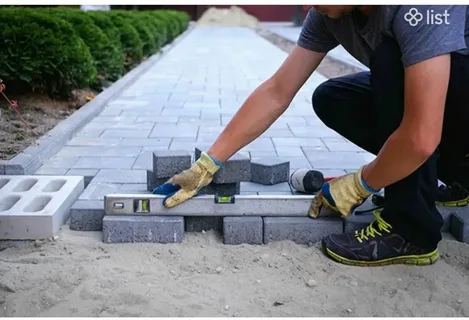
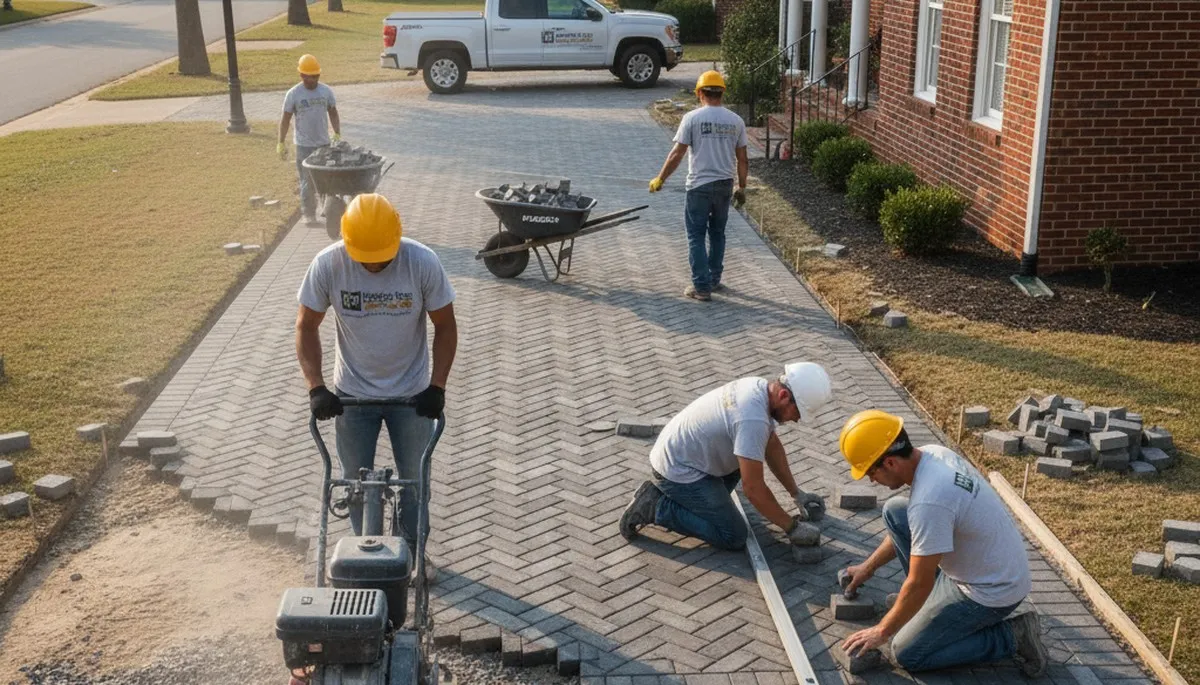
Compared to asphalt and concrete, the interlocking paver installation process is more labor intensive. It has to be prepared with a careful base, a precise grading of the pavements, a compacted crushed stone base layer, and precise placement of each pavement to ensure that the joints are placed at uniform spacing. Over time, concrete curbing is normally used around the edges to stop edge creep. When constructed by professional and high quality pavers that are installed properly, a paver driveway can be a very long-lasting and impressive driveway choice for the homeowner.
The Driveway Installation Process: What Actually Happens on Your Property
Knowing some of the requirements for a professional driveway installation can help you determine if contractors are saving time at the expense of quality or not. There are more steps involved than the average homeowner thinks and each step has an impact on the driveway’s ability to function well over the years or develop problems already in the first rainy season.
Site Assessment and Base Preparation
It all begins with a diagnosis of the current situation. The licensed paving company will first study the type of soil found on the site, determine the slope of the ground and check if there is any drainage problem before deciding how it will be installed. It is very important that the drainage issue be solved before paving, rather than after. French drains, catch basins, or landscaping to direct water away from the building to a proper drainage point may be an option for driveway stormwater solutions.
The base preparation work entails excavation of the site to the right depth which is usually six to eight inches for residential driveways in Miami. After excavation, a compacted crushed stone base is added to the site. This aggregate layer stabilizes the surface layer and releases water from the subbase so the surface layer is not undermined. A plate compactor or vibratory roller is used to compact the surface of the base to achieve the necessary density for the base to not settle over time. It is tedious work, done below the surface of the driveway, and it is not visible in the driveway; it is the one thing that makes the difference between a driveway lasting 5 years or 25.
Material Installation and Finishing
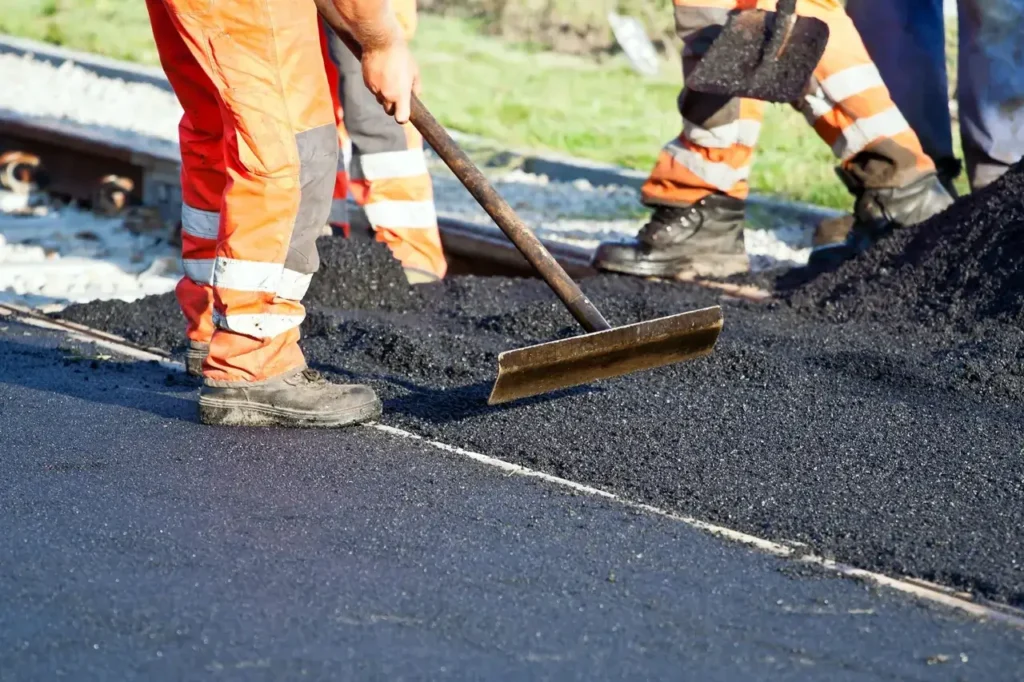
Once the base is finished, the surface material is applied to it depending on their requirements. Hot-mix asphalt is used for asphalt driveway installation, and is applied in one or two layers and rolled in place while still hot. Timing is important because asphalt needs to be compacted inside a certain temperature range, which is why experienced crews are efficient and never start at the end of the afternoon.
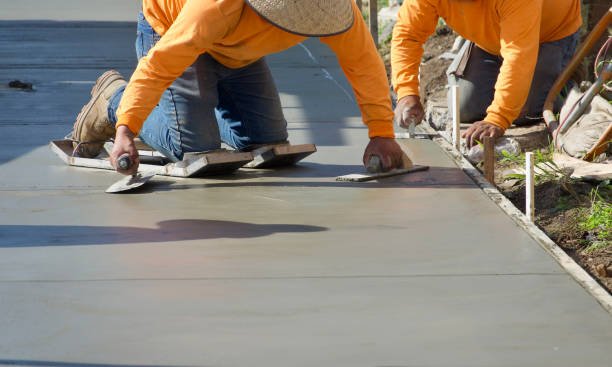
Concrete driveway paving involves pouring, striking off and texturing the concrete to the appropriate surface. Expansion joints are cut or formed at intervals that depend on the size of the slab. To cure concrete in hot Miami weather, it is important to apply a curing compound or wet cure under burlap to prevent rapid moisture loss and subsequently weaken the surface of the concrete. The short-cut is a common one that results in a scaled surface and early surface damage.
The last step in paver installation is to compact the entire surface again, after filling the joints with joint sand. Curbing added around perimeter for concrete; site cleaned and inspected prior to leaving for the crew. A good paver driveway installation contractor in Miami takes the final inspection as seriously as any other part of the process.
Choosing the Right Driveway Contractor in Miami
The contractor who you hire is the most important factor that determines the quality of your driveway. There are a lot of paving companies in Miami, but the level of experience, the licensing and materials used can be significantly different. Being careful about choosing contractors is not paranoia, it is a crucial decision in the whole project!
What to Look for in a Residential Paving Contractor
Legitimate Florida paving contractors will have a Florida contractor’s license, liability insurance, and will abide by local building codes. Check these credentials prior to signing any contract. In addition to licensing, inquire about the contractor’s experience in Miami, given that the soil conditions, drainage needs and performance of materials vary significantly in South Florida versus other markets.
Request photos of similar projects and, if applicable, look at finished driveways instead of just the photos. Watch for bids that are too low. The price difference between the competitive bid and a drastically lower one is nearly always the result of a different depth of base, different materials, or different crew experience in driveway paving. The affordable driveway paving Miami does not have to come with low quality materials and shoddy workmanship; it’s about the contractor’s overhead being under control and his pricing not being exorbitant, coupled with his work being done correctly the first time.
Hulse Construction Group starts every project by conducting a detailed site assessment and then prepares a written scope of work with exact specifications of materials, methods and base preparation standards used. Knowledgeable homeowners make informed decisions – and informed decisions make for well-performing driveways for years.
Driveway Maintenance After Installation: Protecting Your Investment
After installing the driveway, it is crucial to keep it in good shape.Once it is installed, you should take good care of your driveway.
Installation is but the first step! It is important to maintain the pavement of a quality driveway regularly, and in Miami’s climate, neglect can cause more damage than in most parts of the country. There are a few simple practices that can add a long, long life to any driveway material.
Sealcoating is recommended six to twelve months after the asphalt is installed, after it has cured. Following the initial application, seal coating is done every 2-3 years to prevent binder oxidation from the sun and water. Pavement crack repair should be done promptly: a small crack that has little cost to fill becomes a structural problem if it is filled again and again from below by water. For driveway surfaces that are showing signs of wear and tear but the underlying material is still in good condition, driveway resurfacing services may be a viable option as it does not require the entire replacement of the driveway, just the reapplication of the surface layer.
A penetrating sealer helps to repel moisture and salt in concrete driveways. A topical sealer can also help with the color and sheen of the stamped finish and be used in decorative concrete. Sometimes, paver driveways will need to have their joint sand refilled, and they’ll need to be re-compacted if the initial installation has been dislodged by lots of traffic from vehicles both of these are relatively easy maintenance jobs that will not cost as much as replacing asphalt or concrete if it’s cracked.
When it comes to enjoying the longest service life from your driveway, you’ll almost always be one of the homeowners who have had routine driveway maintenance services performed before something visibly breaks. That is the difference between a 15-year driveway in Miami and a 25-year driveway.
Conclusion
A driveway is not a simple home improvement, but rather a structure that sees thousands of cars passing through it on a yearly basis, and is also exposed to one of the toughest climates in the United States. It’s not just about the materials used; it’s about having the right ones for the job, a well-prepared and compacted base, a contractor familiar with the unique requirements of South Florida, and maintenance to ensure the investment lasts.
When designing a driveway, whether it’s an old, traditional asphalt driveway, a strong and long-lasting concrete driveway, or a personalized, creative paver driveway installation near Miami that enhances the overall design of your exterior, the key is to work with a contractor who is truly knowledgeable and honest about the project. At Hulse Construction Group, we’ve made a name for ourselves in Miami by doing just that and all of our driveways are built to uphold that promise.
FAQ’s
Miami’s soil conditions, drainage requirements, and extreme heat demand higher-grade materials and more thorough base preparation than many other markets. Labor and material costs in South Florida also reflect the local economy. A contractor charging significantly less than market rate is almost certainly cutting corners somewhere in the process.
An asphalt driveway typically takes one to two days from start to finish. Concrete installations take a similar amount of time to pour but require an additional three to seven days of curing before the surface can handle vehicle traffic. Paver driveways vary based on size and design complexity but generally take two to four days for a standard residential project.
All three major options asphalt, concrete, and pavers can perform well in Miami when properly installed. Asphalt offers the lowest entry cost and easiest repair. Concrete offers longevity and design flexibility. Pavers offer the highest curb appeal and the easiest individual repair. Your best choice depends on your budget, aesthetic preference, and how long you plan to stay in the property.
In Miami’s climate, sealcoating every two to three years is the standard recommendation. The first application should happen no sooner than six months after installation, allowing the asphalt to fully cure and harden before the sealer is applied.
Yes, in many cases. If the base layer is still structurally intact and the surface damage is limited to the top layer, driveway resurfacing services can restore the driveway at a fraction of the cost of full replacement. A professional assessment by a licensed paving contractor will determine whether the base is solid enough to support resurfacing.