Plan reliable concrete services in Miami, FL with confidence. Compare mix designs, the pour process, budget drivers, and how to pick a local contractor.
Concrete sits underneath almost every South Florida property in one form or another. Driveways across Coral Gables, pool decks in Pinecrest, foundation slabs in Brickell high-rises, and warehouse floors out in Doral all depend on a proper mix and a clean pour. When that work goes wrong, the damage shows up fast in our climate. Cracked slabs, spalling surfaces, and rust stains from corroded rebar all signal that something skipped a step.
That is where local crews like Hulse Construction Group step in, handling everything from a single driveway pour to commercial slab projects and decorative finishes across Miami-Dade County. Picking Reliable Concrete services in Miami, FL means working with a team that knows how saltwater intrusion, high humidity, and intense UV affect concrete differently than in drier climates. If you are searching for the Best concrete contractor services in Miami, FL, learning the right material specs, install steps, and warranty terms helps you sort serious quotes from cheap bids that fail by year three.
This guide walks you through why concrete matters, the mix and finish options worth knowing, the pour process, what shapes the bill, and how to vet a contractor.
Why South Florida property owners take concrete seriously
Concrete carries far more weight in Miami than in cooler markets. Saltwater drifts inland from Biscayne Bay, summer humidity stays above eighty percent for months, and afternoon thunderstorms keep surfaces wet for hours at a time. These conditions punish poor concrete work much faster than dry markets like Phoenix or Denver.
What pushes Miami owners to call a concrete contractor? Cracked driveways and pool decks lead the list for residential properties. Sun-baked surfaces around Westchester and Kendall develop hairline cracks that widen with each rainy season. Pool deck pavers come loose when the underlying slab settles. The longer these issues sit, the more expensive each repair becomes.
Foundation and structural work dominate commercial calls. Mid-rise builds in Wynwood and the Design District need post-tensioned slabs and engineered foundations to handle our limestone and high water table. Warehouse owners across Hialeah and Medley need heavy-duty floors that handle forklift traffic for decades.
A licensed concrete contractor in Miami-Dade put it plainly: “Down here you cannot pour concrete the same way they do in Atlanta. Salt air, humidity, and pour-day rainstorms all change the playbook. Crews from up north learn that the hard way.” Owners shopping for Reliable Concrete services in Miami, FL often book during the cooler months from December to April when humidity and afternoon storms drop off slightly.
Concrete mix designs, finish options, and reinforcement choices
Picking the right concrete mix and finish shapes how long the work holds up under our climate. Each choice carries its own balance of cost, strength, and appearance.
Standard ready-mix concrete handles most residential projects. Miami-area concrete plants typically supply 3,000 to 4,000 psi mixes for driveways, walkways, and small pads. Higher 5,000 to 6,000 psi mixes get specified for heavier loads or structural work. The mix design also includes specific cement type, aggregate gradation, and admixtures matched to the application.
Fiber-reinforced concrete adds tensile strength for crack control. Polypropylene or steel fibers blended into the mix help control plastic shrinkage cracks during the critical first hours after pouring. Many Miami pool deck and driveway pours benefit from fiber reinforcement at a small added cost per yard.

Rebar and welded wire mesh handle structural reinforcement. Epoxy-coated or galvanized rebar resists corrosion in coastal areas around Coral Gables and Coconut Grove. Standard black rebar may rust within a decade if the concrete cover is too thin or chloride exposure is heavy. Proper rebar chair spacing matters as much as the rebar grade itself.
| Application / Mix | Typical PSI | Reinforcement | Best Use Case |
| Standard residential driveway | 3,000-4,000 | Wire mesh, fiber | Homes inland from coast |
| Coastal pool deck | 4,000-5,000 | Epoxy-coated rebar | Salt-exposed properties |
| Commercial slab | 4,000-5,000 | Rebar grid, fiber | Warehouses, retail, offices |
| Structural foundation | 5,000-6,000+ | Engineered rebar | High-rises, HVHZ builds |
The concrete pour process from forms to final finish
Every solid concrete pour moves through roughly the same path. Knowing each step helps you spot a crew that rushes prep work, which is where most early failures start.
Site prep comes first. Crews remove old concrete, organic material, and any unstable fill. The sub-base gets graded and compacted with proper moisture content. For Miami-area projects, this stage often turns up high water table issues that need addressing before forms go in.
Forms and reinforcement go in next. Wood or metal forms set the perimeter and any expansion joints. Rebar, wire mesh, or fiber reinforcement get placed at proper depth using chairs to keep them from sinking to the bottom during pour. Inspection from Miami-Dade County or City of Miami building officials often happens at this stage for permitted work.
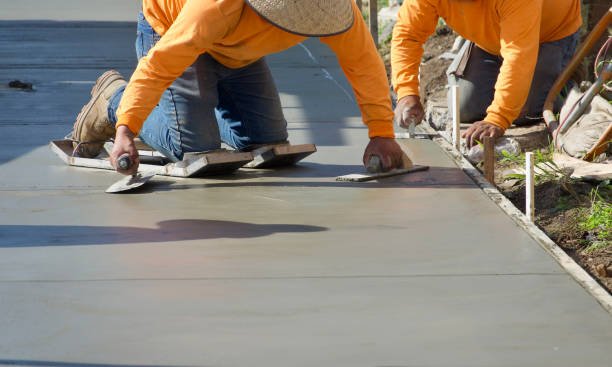
Pour day demands tight coordination. Concrete trucks arrive on schedule from local ready-mix plants like Titan America, Argos, or Vulcan. Crews place, screed, and float the concrete in continuous sections to avoid cold joints. A licensed concrete foreman working across Miami-Dade told us simply: “Get the forms tight and the rebar right, and pour day is the easy part. Skip those steps and no amount of finishing fixes it.”
Budget drivers and selecting a Miami concrete contractor
Two concrete quotes for the same project can land at very different totals. The drivers come down to mix design, scope, and site conditions.
Factors that move a Miami concrete budget
The square footage and thickness counts a lot. The bigger the pour the more concrete, the longer the crew, and the bigger the equipment set up needed. Slabs can be four or six inches thick and the six-inch slabs can handle heavier loads. However, they require more cubic yards of mix. Most SUVs and truck driveways are thicker than walkways and patio pours.
The shift in budget due to design mix and reinforcements At affordable price point standard mix. At the high end are mixed with silica fume and epoxy-coated rebar for coastal grades. Finishing techniques such as stamping or polishing architectural concrete add legitimate labor and material costs over structural concrete.
Site conditions disguise real costs throughout Miami. Excavation may require dewatering due to high water table. Many South Florida properties may need to have their limestone altered. Demolishing and disposing of the existing concrete brings tipping fees at construction debris facilities such as Medley Landfill or Doral Recycling.
Permits and inspections complete be significant engines. The construction of a driveway bigger than a certain size, all structural slabs, and any pool deck work tied to a pool permitted pool project requires a building permit from the City of Miami and Miami-Dade County.The HVHZ zone involves coastal work that is subject to the Florida Building Code and Miami-Dade NOA (Notice of Acceptance) approvals.
How to vet a concrete contractor in your area
Start with licensing. Florida requires concrete contractors performing structural work to hold a Certified or Registered Building Contractor license through the Department of Business and Professional Regulation (DBPR). Verify the license online, confirm general liability insurance, and check workers’ compensation coverage in writing.
References tell the rest of the story. Ask for three completed concrete projects from the past twelve months in Miami-Dade County, then call those owners. Did the slab pass inspection on the first try? How does the concrete look after a full rainy season? How did the crew handle the cleanup and any small punch-list items?
A contractor working almost only across Miami-Dade County, such as Hulse Construction Group, will already know which ready-mix plants deliver on time during peak season, how the county permit office handles inspections, and which mix designs hold up against salt air and humidity. That focused background often beats hiring a general handyman or a national chain that subcontracts the actual pour work.
Read every estimate carefully. The Best concrete contractor services in Miami, FL spell out mix design (psi rating, cement type, admixtures), reinforcement specs, thickness, finish type, joint spacing, curing method, permit handling, and warranty terms in writing. Avoid bids that list only a per-square-foot price with no material or thickness specs.
FAQ’s
In Miami, what is an average concrete project time?
In Miami-Dade County, usually, most residential driveway pours finish in 2 to 4 days which includes the prep, pour day, and initial cure before light foot traffic. The pool deck project should take around one to two weeks. The scheduling of engineering and inspection of rebar on commercial slab projects and foundations can run on weeks.
Is a permit needed for concrete work in Miami, FL?
The City of Miami and Miami-Dade County require permits for any driveway beyond a certain dimension, structural slabs, foundations, pool decks, and any concrete work in the public right-of-way. Coastal projects must follow HVHZ standards. Your contractor is responsible for obtaining all permits, scheduling inspections, and providing you with copies of approvals after completion of the project.
What causes Miami concrete prices to be elevated?
Coastal mix design, epoxy-coated rebar, excavation under a high water table, decorative finishes such as stamped concrete, slab demolition, commercial walkway ADA compliance, and HVHZ engineering all impact costs. The final figure in most proposals is affected by permit fees in Miami-Dade and scheduling the delivery of materials when the building boom knocks at the door.
What concrete blends can stand up to Miami’s salt air, humidity?
Concrete that has low water–cement ratios (0.40 or lower), admixtures of silica fume or fly ash, Type II or Type V cement, and appropriately epoxy-coated or galvanized rebar performed very well in coastal Miami. The standard inland mixes near Biscayne Bay or in coastal salt-spray areas were not holding up as expected.
How often do I need to seal or maintain my Miami driveway or pool deck?
In Miami, quality concrete sealers are recommended every two to three years for most residential concrete surfaces. The chlorine and constant moisture can cause pool decks to require more maintenance. Protecting the surface from oil stains, rust marks, and biological growth that can quickly occur in our humid South Florida climate.
Conclusion
A successful concrete project is a matter of picking the right contractor, matching the mix to your environment, and reading every proposal in detail before signing. Ensure you verify the DBPR license, check references locally, and confirm written warranty terms on both materials and workmanship. Due to Miami’s salt air, humidity and HTVZ requirements, owners are rewarded by selecting durable mix designs and skilled, experienced finishing crews. For a no-obligation on-site evaluation, contact Hulse Construction Group whenever you feel ready to move forward. Without obligation, the team can guide you through mix options and realistic timelines.